If I lost my job tomorrow and had to start from zero, I wouldn’t panic.
I’d follow a system. One that’s worked for me, for my clients, and for hundreds of digital professionals trying to break back in
Here’s what I’d do, step by step 👇
✅Step 1. Pause and Get Clear Before Applying to Anything
Most people jump straight into job boards.
Instead, I’d grab a blank page and get brutally honest about my positioning.
What specific problems do I solve?
How do I prove the impact I made?
Who’s my ideal employer?
Who decides on hiring there?
This helps me rewrite my CV, LinkedIn, and portfolio with purpose…. …it’s no longer about what I did. It’s about why it matters.
Don’t know where to start? Use the Job Finder Kitto elevate your LinkedIn, improve your CV.
🤖Step 2. I’d do smart research (and let AI help).
I’d review 10–15 relevant job descriptions and understand how companies are talking. What words they use. What they value. Then I’d ask GPT something like: 🧠 “Analyze my CV and LinkedIn vs. this job description. What am I missing? How do I get past ATS filters?”
📊 Step 3. I’d build a job search system that works like a funnel and treat it like a campaign.
Inform my closest network I’m actively looking
Set alerts on LinkedIn & Indeed (and check daily)
Make a target list of 50 companies that fit my values and strengths.
Connect with key people inside those companies.
Send a personalized message expressing interest and asking for a referral.
Follow up (because most people won’t reply the first time).
📢Step 4. I’d make noise (in a good way). Looking is great. But people need to see me.
Go to in-person networking events where I can meet with other peers.
Post and comment meaningfully on Linkedin posts positioning myself as an expert
Visibility builds trust before the interview even happens. Is it a lot? Yes. But looking for a job is a job.
Final Thought
And like any job, it works best when you have a system. Will it feel like a lot? Yes. Will it pay off? Absolutely.
This 4-step system has helped dozens of my clients land high-impact roles faster, with more confidence and less burnout.
With a clear plan, a strong brand, and smart networking, you’ll go from “invisible applicant” to “person they already know.”
Need help building your own system? Let’s work together
Be visible, get hired: it’s not about fame or viral content. It’s about positioning yourself so recruiters, clients, and hiring managers can’t afford to ignore you.
Why Visibility is the Game-Changer
Many talented professionals struggle to land opportunities simply because they remain invisible in a saturated digital world. Even excellent CVs go unnoticed without a strategic personal brand, optimized LinkedIn, and a clear narrative that aligns with your target role.
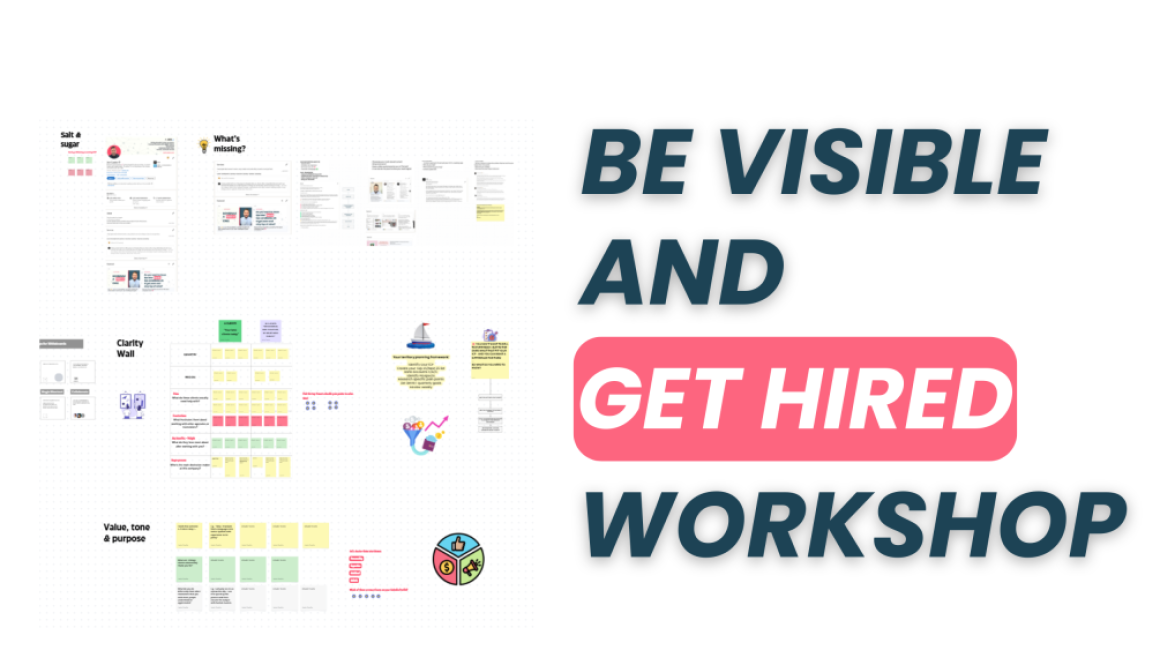
The Be Visible & Get Hired Workshop is your chance to turn your CV and Linkedin into a magnet, for clients, recruiters and the right conversations.
Without pressure. Because you don’t need 10K followers or go viral. You just need the right people to notice you.
4 Key Steps to Be Visible and Get Hired
1. Define Your Niche & Message
Clarify your professional identity: your niche, tone, and value proposition. A positioning summary like “UX researcher for HealthTech startups who makes products accessible” helps filter opportunities and resonate with hiring teams.
2. Align Your Online Presence
Consistently update your LinkedIn, portfolio, and résumé to reflect your niche and goals. Use your positioning summary in your headline, About section, and job descriptions so they form a coherent story. Don’t know where to start?Use the Job Finder Kitto elevate your LinkedIn, improve your CV.
3. Implement a Natural Social-Selling Process
Build awareness through content that showcases your domain expertise:
Share case studies, insights, or mini blog posts on LinkedIn.
Engage with relevant communities and comment thoughtfully.
Send value-first outreach: introductions, thoughtful questions, or feedback, not cold pitches.
4. Measure & Iterate
Track what works. Monitor profile views, contact requests, and interview invites. A/B test headlines, content formats, and outreach messages to see what draws attention.
What’s in it for you?
✅ A positioning strategy that finally makes sense 📄 A personal brand summary (niche, tone, value) ✍️ CV & LinkedIn rewrite 🚀 1on1 Mentorship + feedback to A/B test your social selling strategy 🎁 Bonus: Content ideas + feedback on early outreach
If you’re ready to stop blending in…
Let’s build the profile that finally gets you seen.
“Javi, I might consider a career pivot if the situation continues like this.” That’s what a UX designer told me in a coaching session last week. And honestly? I get it. So, is the UX job market in Belgium in crisis or evolution?
Job postings are down, hiring is tighter, AI is creeping into the design process.
Many UXers are wondering: Am I still needed?
I’ve spent over a decade helping companies build top-tier UX teams and guided 150+ UX professionals to land new jobs. In 2021, I wrote this article analyzing the UX job market in Belgium. Back then, demand was booming. Today? It’s a different story. An industry redefining itself in real-time.
The Talent Carousel
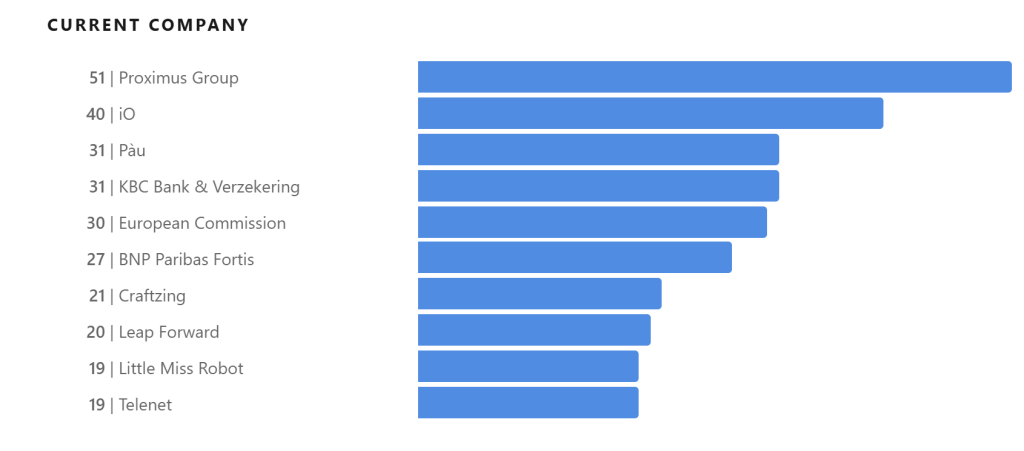
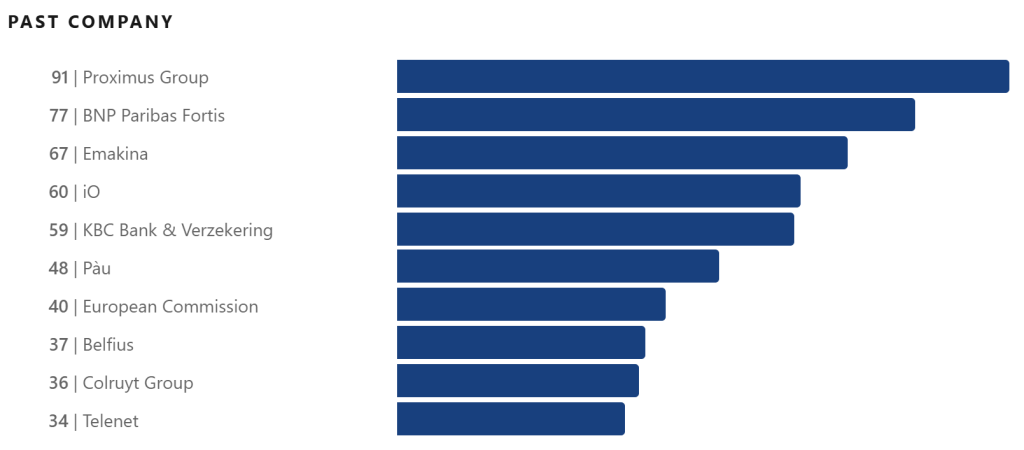
A quick LinkedIn Recruiter search revealed an interesting trend: UX talent keeps rotating almost between the same 10 companies.
So what’s happening here?
Companies outsource UX to staffing agencies and design studios → reducing in-house hiring.
Agencies staff UX designers on short-term projects → leading to more frequent job changes.
When companies bring UX back in-house, they poach from those same agencies.
UX in 2025
The UX market isn’t dying, but it is changing. Companies still need UX professionals, but not just any UX professionals. More UXers are searching for fewer roles, competition is high. The ones who adapt will thrive. The ones who stay static? They won’t.
After dozens of conversations with UXers, hiring managers, and design leaders this is my personal take:
The UX market is maturing.
AI isn’t replacing UXers, but UXers who leverage AI will outcompete those who don’t.
UX careers that stay the same won’t survive, but adaptable designers will.
Employers are more selective than ever.
So how do you make sure you stay competitive? Let’s break it down.
AI in UX: It will reshape who gets hired
Ever since generative AI burst onto the scene, UX designers have been asking the same question: Will AI replace us?
The answer from industry experts? No. But it is changing the game. And the designers who embrace AI will come out on top.
For now, AI is great at:
Automating research synthesis
Speeding up wireframing and prototyping
Synthesizing massive amounts of research data.
But humans are better at:
Understanding emotions and user intent.
Designing for cultural nuances.
Asking the right questions (not just spitting out answers).
68% of UX hiring managers expect demand for UX skills to increase as AI adoption grows (Source: State of UX Hiring 2024 – UX Design Institute). What I can see from my perspective is that the companies I work with want designers who can think, not just execute.
If you’re still designing the same way you did five years ago, you’re already behind.
UX Job Market in Belgium: What’s Really Happening?
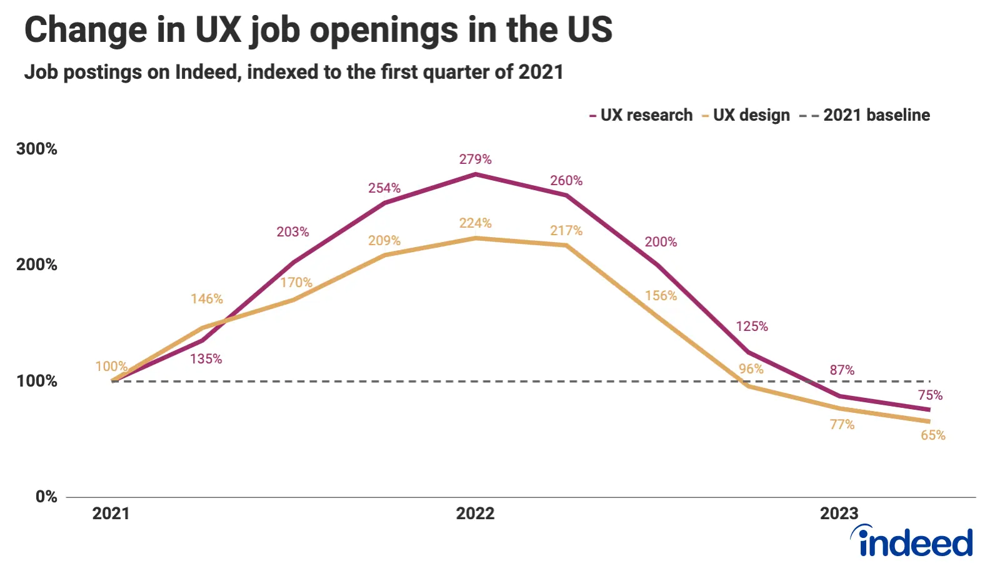
After the pandemic hiring boom, tech companies slammed the brakes in late 2022 and 2023. UX roles took a hit.
📉 Global UX job listings dropped sharply from their 2022 peak.
📉 Belgium was no exception. Banking, insurance, and telecom sectors – major UX employers- slowed hiring dramatically.
Since early 2024, the market has stabilized. I see that job postings have cooled, and employers are looking for UX talent that can deliver impact from day one at a very competitive budget. A common comment from senior freelance UX designers is “Wow, that’s the daily rate I used to bill 5 years ago.”
If you’re a junior UXer, the market is brutal. Bootcamps flooded the industry with graduates, but hiring managers tell me: “We struggle to find great UX/UI designers… and we’re drowning in unqualified applicants.”
The competition is fierce, also in the field of UX outsourcing and staffing which unfortunately translates in a poor candidate experience. Large companies often send the same job brief to multiple agencies and as a consequence talent acquisition turns into a competition of speed over quality, candidates gets spammed, companies get flooded with irrelevant applications, and candidates get excited, then ghosted. No feedback. No Impact. – Javi Cuadra (yes, I’m quoting myself 😉)
And in a slow market, desperation kicks in. Everyone starts selling and submitting applications harder. Ironically, this makes clients even more resistant. In short, fast hiring rarely saves time. It creates turnover, frustration on the applicants, and wasted budgets. Slowing down and hiring with strategy is the real competitive advantage.
What Will Actually Get You Hired in 2025?
“I have experience, but I’m not getting hired”. In a high-competition job market, how do you stand out?. Having years of experience isn’t enough anymore. Here’s what most UX recruiters won’t tell you (but I will! 💡):
📌Many hiring managers aren’t always clear on what they’re looking for, so they rely on candidates to “sell” themselves. If your resume doesn’t grab attention fast seconds, it won’t get read. Hiring managers are more familiar with the business challenges they face and want to see the impact and solutions you can provide. If your resume only mentions things like “wireframing and prototyping” without showcasing your unique contributions, you’re not standing out.
📌 Don’t rely on job boards alone. Many UX roles are filled through networking before they ever hit job boards. Use recruiters as market intelligence, good talent acquisition professional will be happy to share which companies are hiring and how they can make a difference for you.
📌UXers who think like product managers. Don’t just show design work, show the business impact, how it helped the company’s bottom line. You should scream “Here’s what I achieved” not just “Here’s what I did”. I’ve personally screened thousands of UX resumes, the first think I’m looking for is how you created business value.
📌 Specialization. If your skills are broad, highlight one area of deep expertise.
📌 Empathy & Analytical Thinking: Can you design for different audiences and back it up with data?
📌 Adaptability & Autonomy: Can you pivot when projects change? Companies want designers who need minimal hand-holding.
📌 Communication Skills: Can you explain your decisions clearly? UX professionals act as translators, turning user insights into a language stakeholders understand.
On my experience, technical skills might get you an interview, but soft skills will get you the job. As a career coach, I advise: showcase these human skills on your CV and in interviews. Highlight a time you adapted to a sudden change, or how you led a workshop that aligned stakeholders. Those stories stick.
On this las note and as a talent expert myself, I see the hiring landscape is shifting away from degree-based requirements toward demonstrated skills. Skills-based hiring and learning is on the rise, with companies prioritizing hands-on expertise over traditional credentials. Employers are looking for proof of real-world problem-solving: projects, case studies, and results over diplomas.
A UX leader from a Belgian bank recently told me: “I’d rather hire a UXer who communicates well but needs some UI training than a UI wizard who can’t justify their choices.”
Tools come and go. You can always learn Figma, AI, or new workflows. But it’s much harder to teach someone critical thinking, adaptability, and collaboration. These are the skills that will set you apart.
Discover how the Job Finder Kit can guide you to optimize your CV and LinkedIn to get noticed even in a competitive market.
Where Are UX Jobs Heading?
Lean UX Teams, Bigger Impact . Silicon Valley Startups are scaling to $100M ARR with <50 employees. It makes sense that companies are following suit. Expect smaller, high-performing UX teams as well.
The “T-shaped” designer will be in high demand. UX generalists are great, but companies are looking for designers with one deep specialty. Whether it’s AI, accessibility, or UX research, pick an area to go deep on. The near future will reward those who keep learning. As a coach, I encourage you to look at job postings not as checklists to meet 100%, but as a menu of skills to continuously pick up.
AI won’t replace UX, UX will shape AI. You don’t have to be a machine learning engineer, but knowing how to work with AI tools will put you ahead of 99% of designers.
New growth sectors. Belgium’s tech ecosystem is evolving. AI startups, SaaS companies, and deep-tech ventures are growing. If you’re only looking at banks and telcos, you’re missing opportunities.
Final Thoughts
No one has a crystal ball, but by 2030, many of our jobs—including mine—will look completely different. The best professionals evolve with the industry. If I were betting on the future of UX, I’d put my money on adaptability.
For UX professionals, the takeaway is both reassuring and challenging. Reassuring because the world isn’t about to hand everything over to AI or abandon user-centric design. Challenging because to seize these opportunities, you’ll need to be intentional about your growth.
If I were a UX professional in today’s market I’d do a few things:
Be more than just a designer. Because the best designers I ever met don’t just design, they solve business problems and that won’t change.
Network smarter. Belgium’s UX community is active. Many job openings never make it to job boards, stay visible and connected. UX BelgiumUX Ghent . Most people hate networking because they think it means: awkardly messaging strangers, begging for referrals but this is your most powerful strategy to stay top of mind. If you’re applying online, you’re competing with dozens, hundreds of other applicants. Smart networking gives you an edge.
Keep one eye on technological advancements and the other on human-centered fundamentals.
Invest in your skills, both hard and soft.
If you’re a considering a career pivot, ask yourself “Am I frustrated because of the job market, or because I don’t enjoy UX anymore?”. On my experience, not every career frustration means you need a pivot. Sometimes, it means you need a different strategy.
And final and the most important, remember why UX attracted you in the first place: the chance to make technology work better for people.
Have you ever been bombarded with calls for the same freelance job opening? You know the drill … your phone rings, and it’s yet another recruiter offering you the exact same opportunity you’ve already heard about ten times. Welcome to Spam City, where everyone’s in a mad rush to get your CV, often without even bothering to have a real conversation with you. But let’s cut through the noise for a second; how do you actually choose the right partner to work with? How do you know which recruiter is going to be a genuine ally in your freelance journey?
Let’s dig into what’s really going on and how you can navigate this red ocean of opportunity hunters.
The Behind-the-Scenes Reality of Contractor Job Openings
Here’s the deal: a lot of freelance openings are handled by procurement departments in big companies, and their main focus? Negotiating costs and juggling multiple agencies. Sounds efficient, right? Not always. This setup often turns into a feeding frenzy where multiple recruiters are fighting over the same roles, racing to deliver “fast, good, and cheap” candidates.
The result? Your CV might get pushed through the door without anyone taking the time to understand you—your goals, your preferences, or whether the role even fits. Worse, you might be left in the dark, with zero feedback, wondering if anyone even noticed your application. Frustrating? Absolutely. I’ve been there.
How to Identify the Right Recruitment Partner
After a decade in the talent game, I’ve seen it all. And I’ve learned that finding a good career partner isn’t just about who can get you in front of a client the fastest. It’s about working with someone who adds real value to your career. So, before jumping in with a recruiter, ask yourself (and them) these three key questions to figure out if they’re the real deal or just chasing their numbers.
1. What’s Your Legacy with This Client?
Start by getting a sense of the recruiter’s relationship with the company they’re representing. Do they know the company well? Do they understand its challenges, culture, and what it’s really like to work there? A good recruiter should have these insights at their fingertips, reflecting a deep and ongoing relationship with the client.
If they can’t tell you much beyond the job description, that’s a major red flag. You want someone who’s embedded in the company, not just taking a shot in the dark. A recruiter who has a strong relationship with the client will have a much better understanding of whether you’re a good fit.
2. Do You Have Any Other Consultants Working There?
This question is like asking for references, but flipped. A good recruiter will have placed other consultants with that client and should be able to connect you with them. Not only does this give you insight into what it’s like to work there, but it also tells you something important: this recruiter has a proven track record with the company.
If they can’t give you examples of other consultants they’ve placed, you might be dealing with someone who doesn’t have as strong of a foothold in the company as they claim. And that’s a risk.
3. What Else Can You Tell Me Beyond What’s in the Job Description?
This is your chance to see if the recruiter has done their homework. If they can go beyond the generic job description to provide deeper context about the role, the team, and the company’s long-term goals, you’ve got a winner. It shows they’re committed to finding the right fit, not just filling a vacancy ASAP.
A recruiter who truly knows their stuff will help you see the bigger picture and how the role fits into your broader career plan.
Pro Tip: Don’t Gamble on Your Career
Think about it: you wouldn’t get married without really knowing and trusting your partner, right? (Unless you’re in Las Vegas and feeling spontaneous.) The same goes for your professional relationships. Don’t commit to working with a recruiter—or an agency—without making sure they’re as invested in your success as you are.
Build strong relationships with a few key partners, and track where your applications are going. Working with two or three agencies gives you a broader reach without the confusion of duplicate opportunities flooding your inbox.
So, the next time a recruiter calls you, don’t just listen to their pitch. Ask the right questions, make sure they’re in it for the long haul, and find someone who’s committed to your success. Because in the end, the right partner can be the difference between landing just another gig and building a career you’re genuinely proud of.
You’re in the hot seat, and the hiring manager leans in with that question: “Why are you leaving your current job?” Your heart skips a beat, and suddenly, it feels like every career decision you’ve made is under a spotlight. I’ve been there. It’s one of those moments that can make you question everything, but here’s the thing, you don’t have to let it trip you up.
With over a decade in the staffing game and more than 1,000 interviews under my belt, I’ve seen how people handle this tricky question. And guess what? It’s not just about why you’re leaving; it’s about how you tell the story. The candidates who nail this? They reframe their departure with positivity, honesty, and a clear focus on the future.
Employers want to see that your move aligns with your career goals and that you’re bringing something valuable to the table. So, let’s dive into how you can ace this crucial moment in the interview.
Here is how you can master this crucial interview moment.
Start on a Positive Note
When discussing why you’re leaving your current job, always keep the tone positive. This isn’t the time to vent about your current situation. Instead, focus on what you’re moving toward, not what you’re leaving behind.
Try something like this: “I’ve enjoyed my time at [Current Company] and have learned a lot about [specific skills or experiences], I feel very proud of [Main achievement].
Right away, you’ve set a positive tone. You’re not just running from something, you’re ready for what’s next.
Be Honest, but tactful
Honesty is crucial, but it’s equally important to balance it with discretion. Yes, it’s crucial to be truthful, but there’s a fine line between transparency and airing disappointments. Focus on the lessons learned rather than the obstacles faced. Here’s a formula that works:
Example: “After [period of time] at [Current Company], I’ve realized that [key attributes of your ideal job] are essential to my career satisfaction because [why it matters to you]. However, I’ve realized that I thrive in environments where I can [Add your main motivation]”
Now you’re framing your departure as part of a thoughtful, strategic move rather than a hasty escape.
Focus on Fit and Future Career Goals
This is where you shift the spotlight from your current job to your next one. Show them that you’re not just job-hopping—you’re making a smart career move that aligns with your long-term goals. Share your excitement about what this new opportunity offers and how you can contribute.
For example: “What got me really excited about this opportunity at [Future employer] is to work on [High value initiatives your future employer is working on] and help you achieve [Future employer goals] by [Deliver your personal power statement]
Boom, you’ve just positioned yourself as a candidate with vision, someone who’s thinking long-term and ready to make an impact.
Plan, Rehearse and Own it
Let’s pull it all together with a full example: “I’m especially proud of growing our user base by 43% in just 18 months. Working on the agency side has been rewarding, but I’ve realized that creativity and seeing projects from start to finish is what keeps me engaged and motivated.
However, I thrive in environments where I can dig deeper into long-term projects that offer sustained impact.
What got me really excited about this opportunity at {Your company} is to work on your new initiative aimed at leveraging AI to enhance customer personalization and help you achieve your goal of becoming the top CX SaaS company in Europe by 2026 by leveraging my expertise in driving user engagement. “
With this, you’re not just answering a question…you’re telling a story. You’re showing the interviewer that you’ve thought this through, and that this move is about growth, not just change.
Final Tips for Success:
Stay Positive: Avoid the temptation to dwell on what’s wrong with your current role. Keep the focus on what’s drawing you forward.
Practice Makes Perfect: Rehearse your answer until it feels natural. This is about owning your narrative, not just getting through the question.
Customize Your Approach: Tailor your response to each company and role. Make it clear why this job is the right next step.
So, what story are you telling in your interviews? Are you painting a picture of past frustrations, or are you crafting a narrative of growth, opportunity, and excitement for what’s ahead?
The way you frame your career journey can make all the difference.
If you’ve been following along, over the last blog posts you’ve already fine-tuned your CV, optimized your LinkedIn profile, and strategically mapped out your job search. Now, it’s time to tackle one of the most crucial stages of your job hunt: the interview.
Let’s be real, interviews can feel like stepping onto a stage where all eyes are on you, and the spotlight can be blinding. It’s easy to think that the most qualified candidate always wins, but the reality is different. It’s not just about what you bring to the table; it’s about how you present it when the pressure is on. With the right preparation, you can walk into that interview room with your head held high and leave with the job offer you’ve been dreaming about.
Over the years, I’ve guided more than 200 individuals in advancing their careers and finding new jobs. The best candidates I remember stood out by doing just that, they didn’t just talk about wanting the job; they had a clear plan for how they could help the company grow, and they were excited to get started.
In this blog post, we’ll dive deep into a 3-step process that will give you the confidence and clarity needed to walk into your next interview and leave a lasting impression .
Step 1: Research – Get Acquainted with the Company and Industry 🔍
Think of your interview preparation as gathering ammunition for a strategic battle. The more you know about the company, the industry, and the people you’ll be speaking with, the better equipped you’ll be to showcase your value.
Start with the Basics
Start by diving deep into the company’s website. Explore their products, services, and market position. As you navigate through their online presence, ask yourself: What sets them apart? What strengths do they highlight? This isn’t just background information—it’s your toolkit for tailoring your responses to fit what they’re looking for.
Understand Their Customers and competition
Next, think about their customers. Who are they? What problems does this company solve for them? By aligning your own experience with the company’s needs, you demonstrate not just your expertise, but also your commitment to helping them succeed. And don’t stop there—take a look at the competition. What are the latest industry trends? How do other companies tackle similar challenges? This insight can arm you with innovative ideas to bring up during your interview.
Connect on Linkedin
Finally, connect with your interviewer before you even meet. A little LinkedIn look-around can reveal shared interests or experiences that you can weave into your conversation, creating an instant rapport. For example, if you see that your interviewer has a background in digital marketing, and you do too, that’s a perfect thread to pull during your chat.
Example: Imagine you’re gearing up for a marketing role at a fast-growing e-commerce company. You discover they’re planning to expand internationally—an area where you’ve had significant success in the past. During the interview, you bring up your experience with global marketing campaigns, subtly showing that you’ve done your homework and that you’re already thinking about how you can contribute.
Step 2: Anticipation – Prepare for Common Interview Questions 🧠
Walking into an interview is like stepping onto a stage where you’re expected to deliver a performance that showcases why you’re the right fit. But this performance isn’t about acting—it’s about being fully prepared to prove that you’re exactly what the company needs.
Dissect the Job Description
Each requirement is a clue, pointing you toward what the company is really looking for. Match your experience with these needs and prepare to share specific examples that illustrate your ability to excel in those areas. Think back on your past roles—how have you demonstrated the key competencies they’re asking for, like leadership, problem-solving, or communication skills?
Address Company Challenges
But don’t stop at the job description. Dive deeper into the company’s current challenges and strategies. Are they expanding into new markets? Developing a new product line? Think about how your skills can help them achieve their goals. And while you’re at it, consider how you might offer constructive feedback on areas where you see room for improvement. Just remember to present these as thoughtful suggestions, not criticisms.
Here is another good example: Picture yourself preparing for an interview at a tech startup. You’ve noticed that they value strong problem-solving skills. During the interview, you recount a time when you streamlined a project, cutting the timeline by 20%. You even mention a tweak to their website that could enhance user experience—a small change with a big impact. This kind of anticipation shows that you’re not just ready for the job—you’re already thinking about how to add value.
Step 3: Motivation – Show Your Enthusiasm and Fit with the Role 💡
This is where you seal the deal. It’s not just about convincing them that you can do the job—it’s about proving that you want to do it, that you’re excited about the opportunity, and that this role is a natural next step in your career journey.
Speak to Your Passion
When they ask, “Why this company? Why this role?” your answer should come from a place of genuine enthusiasm. Speak to what excites you about their mission and how it aligns with your own professional aspirations. Whether it’s the challenge of the role, the industry’s potential, or the company’s culture, let your passion shine through.
Align with Long-Term Goals
Consider how this job fits into your long-term career path. Share your goals and how you see this role as a key step toward achieving them. Companies love candidates who are thinking ahead, who are looking not just for a job, but for a future with the organization.
Use a SWOT Analysis
A SWOT (Strengths, Weaknesses, Opportunities, Threats) analysis can be a powerful way to demonstrate your strategic thinking during the interview. Imagine you’re interviewing for a sales position. You prepare a SWOT analysis of the company’s market position and discuss how your strengths align with their opportunities. This shows you’re also thinking critically about how you can contribute to the company’s success.
The best candidates I remember stood out because they didn’t merely express a desire for the job; they had a clear plan for how they could help the company grow, and they were genuinely excited to get started.
Final Thoughts: Prepare, Practice, Succeed!
Remember, the key to interview success is preparation. With thorough research, anticipation of questions, and clear motivation, you’ll walk into your next interview ready to impress. Turn what could be a nerve-wracking experience into a golden opportunity to showcase why you’re the perfect fit for the role.
Now, it’s time to put these strategies into practice. Go out there, ace that interview, and take a step closer to landing your dream job. 🚀
Ever felt that “What motivates you?” is one of those curveball questions in interviews? 🙄 You’re not alone! The word “motivation” can feel big and intimidating, especially when you’re trying to articulate it effectively. With so many factors—intrinsic, extrinsic—it can seem like you need to craft a perfect, deep answer that ties your values and life story together.
Keep it simple
But it doesn’t have to be that complicated. Instead of overthinking your response, try reflecting on past experiences where you felt energized and engaged at work. Think of moments when you were genuinely excited, productive, and part of something meaningful. This approach will help you share an authentic answer that resonates with the interviewer.
Find Your Best Moments
For example, you might say “I thrive when I’m part of a collaborative team working towards a common goal. One of my favorite projects was when we launched a new product and had to overcome a lot of challenges together. The sense of teamwork and seeing our efforts pay off was incredibly motivating. I believe this aligns perfectly with the team culture at [Company Name], where collaboration and innovation are at the forefront of every project.”
This answer does a few things:
Relatability: It shares a real experience, making your response relatable and genuine.
Clarity: It clearly defines what motivates you without getting overly complex.
Connection: It demonstrates how you value collaboration and teamwork, aligning your motivation with potential organizational values.
When you approach the question this way, it lifts the pressure of crafting a “perfect” story. Instead, you’re sharing a meaningful snippet of your professional journey that showcases what truly drives you. So, next time that question comes up, embrace the opportunity to share what genuinely fuels your passion!
Let’s set the scene: Your LinkedIn profile is more than just a digital resume: it’s your online stage, where you get to shine in front of potential employers and industry leaders. Think of it as your professional showcase, where every detail counts in creating an unforgettable impression. o, how do you make sure you’re not just another face in the crowd but someone recruiters remember? Let’s dive into a few key strategies to give your LinkedIn profile the edge it needs.
A Picture That Speaks Before You Do
Imagine a recruiter landing on your profile for the first time. What’s the first thing they notice? Yep, your photo. It’s not just a snapshot; it’s a chance to set the tone for everything that follows. Does your image exude confidence? Approachability? A clean, crisp headshot that balances professionalism and authenticity can set the tone for everything else.
I’ve seen profiles where the photo feels like an afterthought: blurry, overly casual, or just… off. Even though recruiters should focus on your experience and skills, first impressions matter. We can’t deny that subconscious biases play a role, and your photo is part of that initial judgment.
Pro tip: Not sure if your photo hits the mark? There are AI tools that can refine your headshot—tweaking lighting, adjusting backgrounds, and even suggesting poses. Make sure your image works for you, not against you.
The Power of Keywords: Your Hidden Secret
Think of your profile as a lighthouse in a stormy sea. To get recruiters to find you, you’ve got to be lighting the right signals—aka, keywords. This isn’t just about stuffing a few trendy buzzwords; it’s about strategically weaving in industry-specific terms that help recruiters match your profile to their search.
I’ve seen candidates miss this crucial step and wonder why they aren’t getting noticed. The reality? Without the right keywords, you’re invisible.
Pro tip: Analyze job descriptions in your field to identify relevant keywords and incorporate them naturally into your profile. For example, if you’re a digital marketer, terms like “SEO specialist,” “content strategy,” and “digital advertising” should be woven into your profile’s headline, summary, and experience sections. In my experience, candidates who do this significantly increase their chances of being found.
Summary That Tells Your Story
Your summary is your chance to tell your professional story. It should be more than just a list of skills and experiences—it’s an opportunity to engage and resonate with your target audience. An engaging summary builds a narrative around your career journey and helps recruiters understand what makes you unique. It’s the “why” behind what you do, and it should resonate with recruiters on a human level. What challenges have shaped your career? What drives you? Where are you headed?
Pro tip: Build your summary around these questions: What obstacles have you overcome? What motivates you? How do colleagues describe you? I remember working with a client who shared their journey from an intern to a department head. That progression showed resilience, passion, and leadership, all in one story. It wasn’t just about where they worked; it was about how they got there.
Showcase Your Achievements
Here’s the thing: listing job duties is one thing, but highlighting achievements? That’s where you’ll stand out. Recruiters want to know not just what you’ve done, but how you’ve made a difference. Don’t just say, “Managed a team”—get specific. “Led a team of 10, increasing project delivery by 20% while reducing costs by $50k” packs a much bigger punch.
Pro tip: Quantify your results wherever possible. I’ve come across candidates whose profiles jumped out because they framed their experience around the results they achieved. Like the person who increased sales by 50% in a down market…that’s something recruiters will remember.
Recommendations: Your Social Proof
Recommendations aren’t just nice-to-haves—they’re your personal endorsements, adding credibility to everything you’ve said about yourself. These are your coworkers, managers, or clients vouching for your skills and work ethic. When done right, they add a layer of authenticity that makes your profile truly compelling.
Pro tip: Don’t just ask for a generic recommendation. Guide your colleague or manager by suggesting the areas you want them to highlight. Are you looking to showcase your leadership skills or maybe your problem-solving abilities? A tailored recommendation can reinforce the story your profile is already telling.
Customize Your LinkedIn URL
This might seem minor, but your LinkedIn URL says a lot about your attention to detail. Instead of keeping the auto-generated string of random numbers, customize it to reflect your name or professional identity. It’s polished, it’s professional, and it’s easier to share on resumes or business cards.
Pro tip: Edit your LinkedIn URL to include your name or a variation that reflects your professional identity. For example, linkedin.com/in/yourname is far more polished than linkedin.com/in/12345.
Ready to transform your LinkedIn profile into a career magnet? Implement these strategies to boost your visibility, engage your audience, and make a memorable impression.
Let’s make your LinkedIn profile work for you! If you’d like personalized feedback or more tips, don’t hesitate to reach out. Your dream job is closer than you think!
You’re chasing that dream job. You’ve got the skills, the experience, the drive…and yet, every time you hit “send” on an application, all you get is radio silence. What’s going wrong? After 10 years working in the staffing industry and having reviewed thousands of candidacies , I can tell you: the answer often lies in your resume. In a crowded job market, your resume must do more than list qualifications—you’ve got to grab attention, show your impact, and stand out. Let me walk you through how to create a resume that makes recruiters say, “We need to talk.”
1. Think Like a Recruiter: What We’re Really Looking For
First things first: you’ve got to understand how recruiters scan resumes. We’re reviewing hundreds of profiles for each role, so what catches our eye?
Relevance: Does your resume speak directly to the job you’re applying for?
Clarity: Can I understand your experience at a glance?
Impact: Are your achievements clear and measurable?
I’ve seen candidates with great experience lose out because their resume was too generic. They didn’t tailor it to the role at hand, and that’s a missed opportunity.
2. Craft a Powerful “About Me” Section: Who You Are and Who You Aspire to Be
Your summary at the top? That’s your first chance to make an impression. This isn’t just a quick intro, it’s your professional pitch. Who are you? What do you bring to the table? And, most importantly, where are you heading?
Actionable Tip: Kick off with your biggest skill or accomplishment. Follow that with a brief summary of your experience and goals.
For example, instead of “Experienced marketing professional,” try: “Results-driven marketer with 5+ years creating high-impact campaigns, increasing engagement by 30%. Passionate about using data to drive strategic decisions and boost brand visibility.” It’s concise, it’s powerful, and it immediately tells me who you are.
3. Tailor Your Experience to the Job: One Size Does Not Fit All
The biggest mistake I see? A cookie-cutter resume sent to every job. If you’re serious about landing a role, you’ve got to tailor your resume to match the job description.
Actionable Tip: Scan the job description for keywords and use them in your experience section. If they want “project management,” show me your project management wins.
For example, if a job requires “strategic planning,” you could state: “Developed and executed a strategic plan that resulted in a 20% increase in market share.” Now your resume isn’t just about your past—it’s about how relevant you are to this job.
4. Highlight Achievements, Not Just Tasks
Recruiters don’t want to know just what you did. They want to know what you achieved. What difference did you make in your last role?
Actionable Tip: Replace generic bullet points with specific accomplishments. Use metrics to show how you made a difference. Use the formula Result = Effort + Impact. Shift your focus from tasks performed to achievements and their effects.
Instead of saying, “Managed a team,” try something more impactful like: “Led a team of 10 to complete a major project two weeks ahead of schedule, resulting in a 15% cost saving.” See the difference? One is a responsibility, the other shows you’re a game-changer. Results speak louder than tasks, and recruiters remember candidates who prove their impact.
5. Keep it Clean and Professional: Looks Matter
I can’t tell you how many times I’ve come across resumes that look like they’re trying too hard—over-the-top designs, bright colors, funky fonts. While it’s great to show personality, your resume needs to be easy to read and professional.
Pro Tip: Use bullet points to make it skimmable. Bold key achievements. Stick to simple fonts and avoid too much design flair.
For example, a clean resume will have sections like “Professional Experience,” “Education,” and “Skills” clearly defined with bold headings. I once reviewed a resume that had great content but used a complicated layout. It was hard to follow, and honestly, it made me less excited to dig deeper. Don’t let design get in the way of your message.
Conclusion: Take Your Resume from “Good” to “Unforgettable”
Your resume isn’t just a list of jobs, it’s your career story. And the better you tell that story, the more likely recruiters will sit up and take notice. Remember, it’s not about how much you’ve done, but how well you’ve communicated your impact.
Ready to take your resume to the next level? Review it with these tips in mind and make the changes that will take it from “meh” to “wow.” If you’re looking for a more tailored approach, I’m here to help. Let’s turn that radio silence into interviews, and get you one step closer to that dream job.